
Selection guide
How to choose mounted points for die grinders and internal grinding
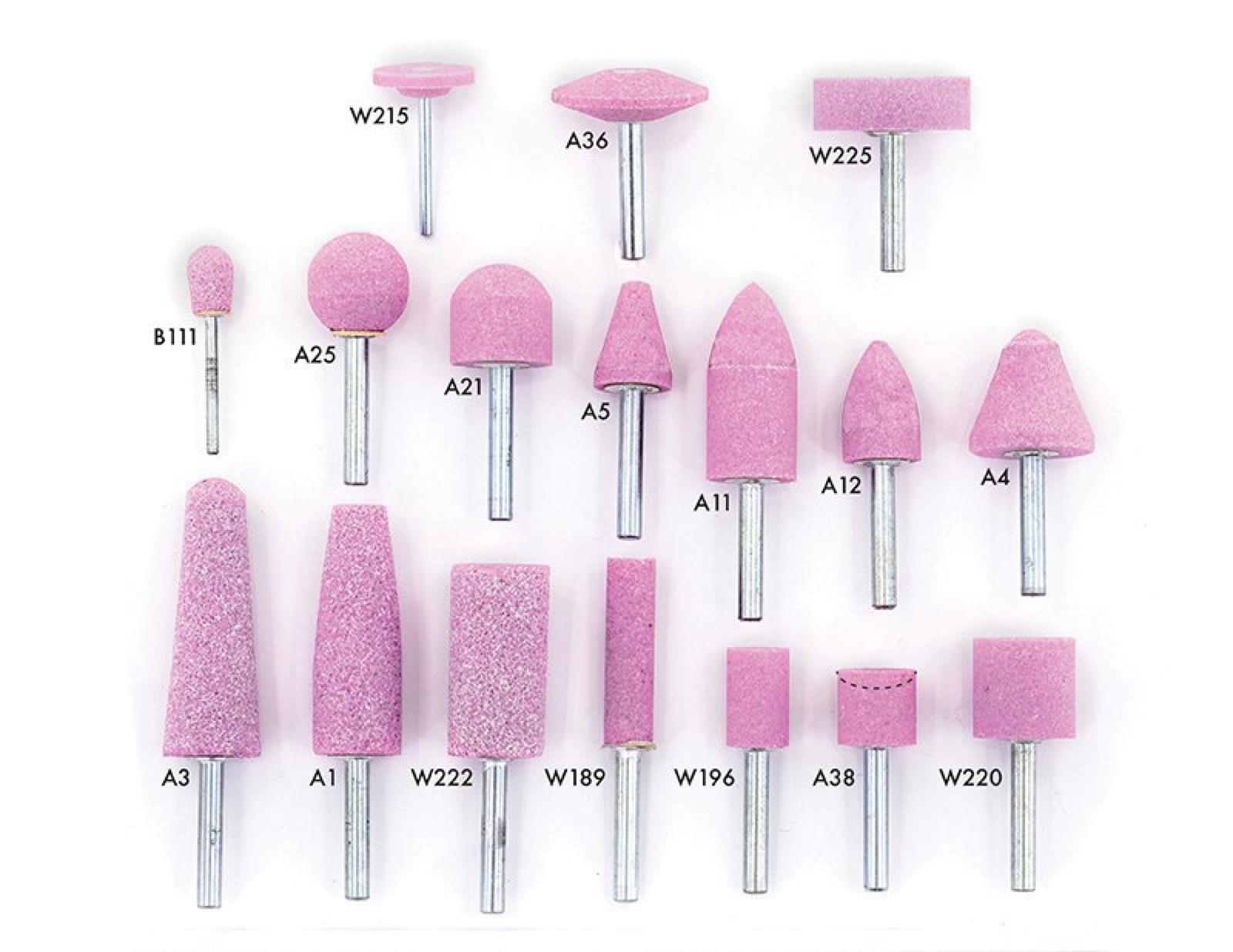
Mounted points are selected by the area they must reach, the amount of stock to remove, the required finish and the machine setup. A good RFQ should connect shape, size, grit and shank details to the real application.
Selection factors
What buyers should confirm before quotation
Shape and access
Cylindrical, round-nose, bullet and cone forms are chosen by bore access, corner radius, cavity profile and the area that needs finishing.
Shank and overhang
Common mounted-point shanks include 3 mm and 6 mm. The unsupported overhang and machine RPM must be confirmed before use.
Abrasive grain
Aluminum Oxide, White Aluminum Oxide, Pink Aluminum Oxide and Silicon Carbide options are matched to work material and finish expectation.
Grit and finish
Coarser grit supports faster burr or stock removal, while finer grit supports blending, finishing and controlled surface work.
Bond and hardness
Vitrified bond references are common for mounted points, but final grade and hardness should match speed, heat and material behavior.
Repeat supply reference
Once a profile and grit works, record the dimensions, grain, grit, shank and application notes for easier repeat orders.
Application fit
Common uses covered by this guide
Use the guide as a starting point, then confirm final abrasive specification against the material, machine RPM, finish target and quantity requirement.
Die and mold cavity finishing
Internal bore grinding
Slot and groove cleanup
Deburring machined edges
Foundry and fabrication touch-up
Toolroom maintenance grinding
Product references
Start with these catalogue references
Cylinder Type
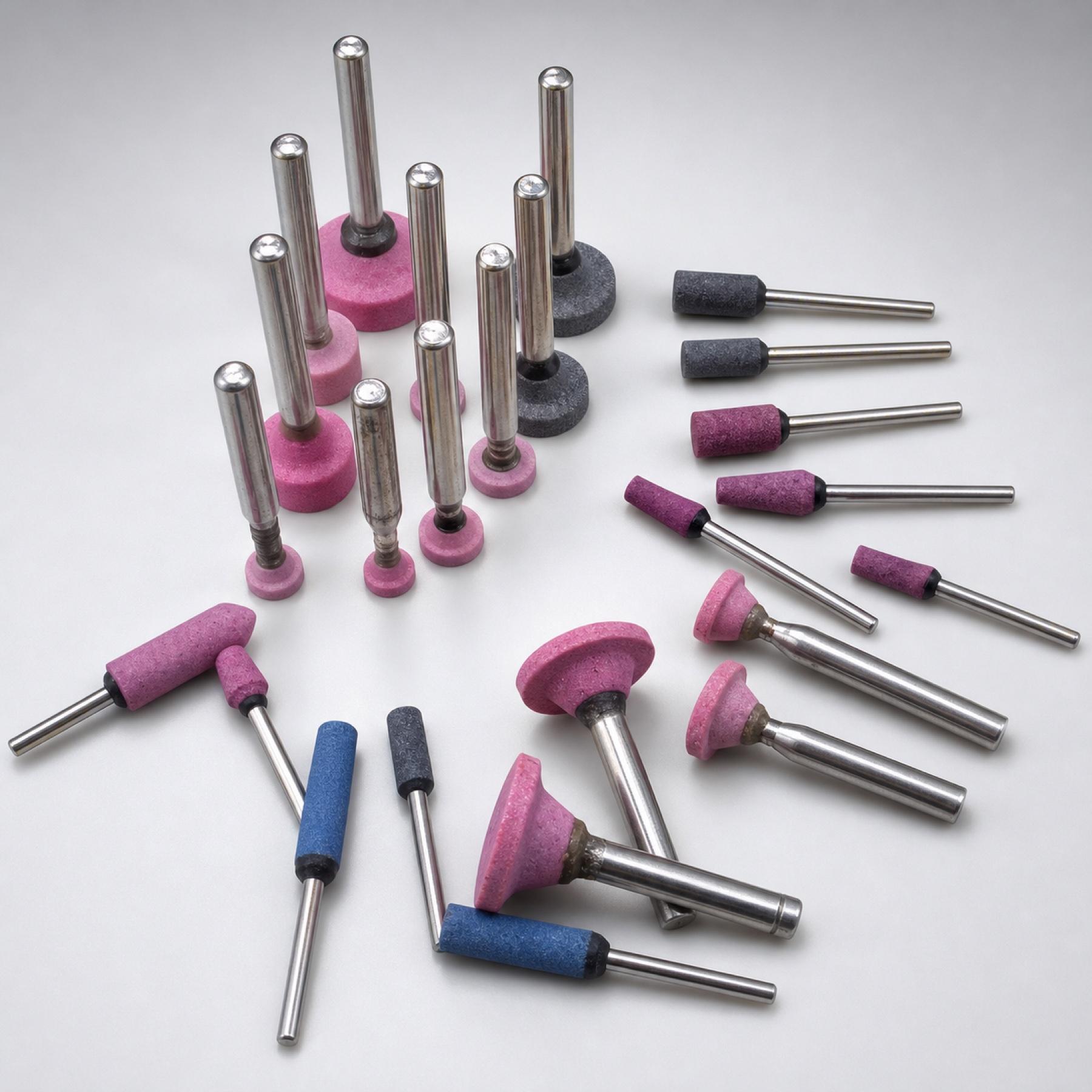
Mounted Point - Compact Cylinder
Typical body: ⌀3-10 × 6-20 mm
Round-Nose Cylinder
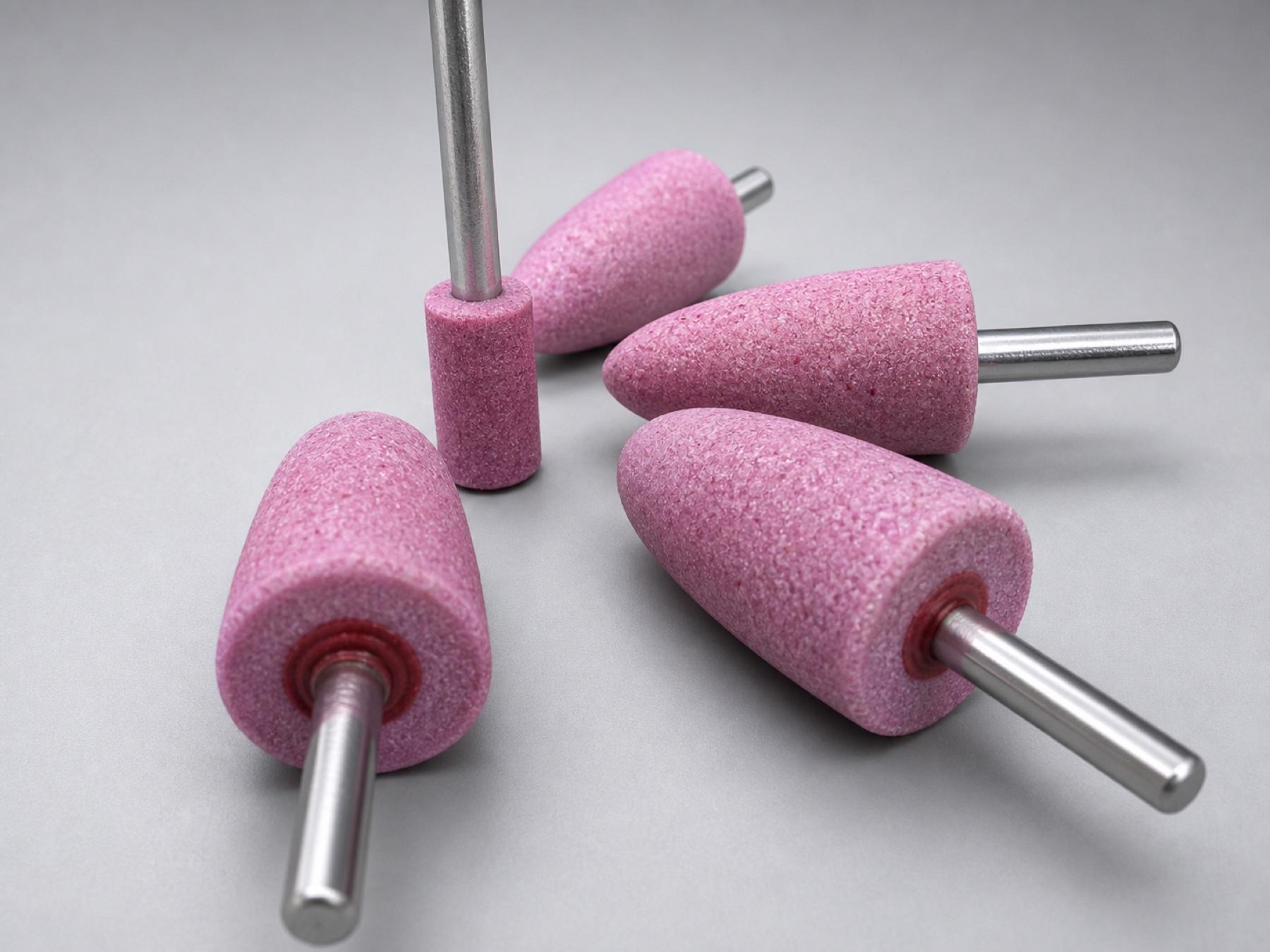
Mounted Point - Round-Nose Cylinder
Typical body: ⌀3-13 × 10-25 mm

Bullet Type
Mounted Point - Bullet Profile
Typical body: ⌀10-16 × 16-25 mm
Small Cylinder (3 mm Shank)
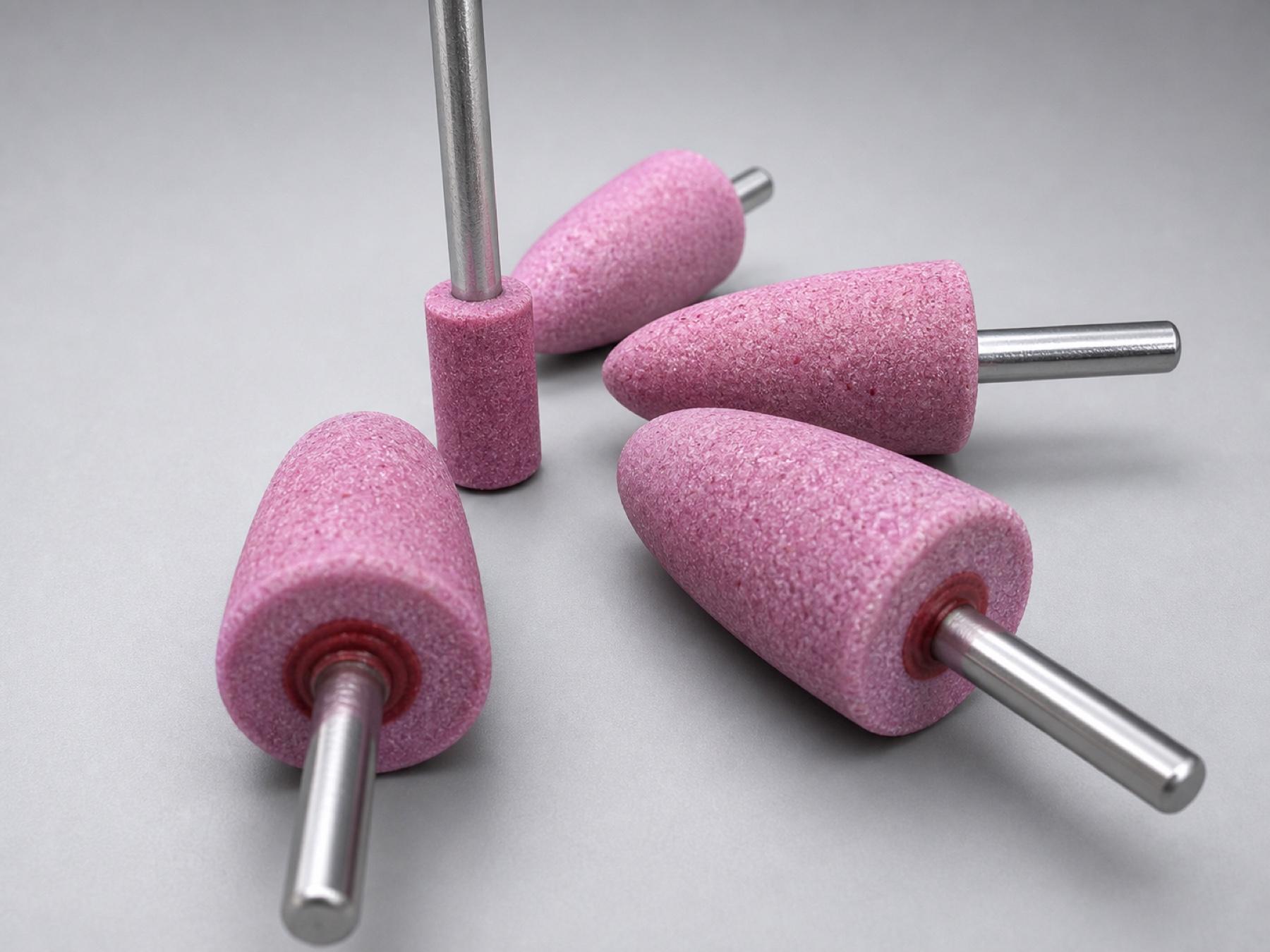
Mounted Point - Fine Cylinder
Typical body: ⌀3-6 × 3-13 mm
RFQ checklist
Include these details for faster selection
- Required profile or sample photo
- Body diameter and body length
- Shank diameter and required overhang
- Abrasive grain and grit if known
- Work material, machine RPM and quantity